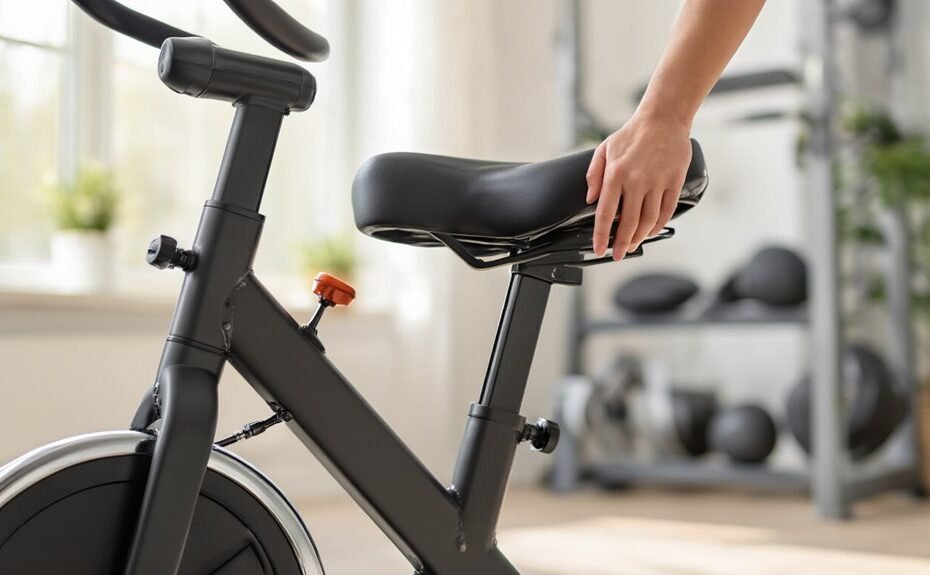
Many cyclists suffer needlessly on stationary bikes because they’ve never properly adjusted their seats. It’s not just about comfort—incorrect positioning can lead to joint pain, muscle imbalances, and diminished workout results. A well-adjusted bike seat transforms the entire exercise experience. Riders often tolerate discomfort thinking it’s normal, when in reality, three simple adjustments could make all the difference. What exactly makes these adjustments so critical for both performance and injury prevention?
Some of the links in this article may be affiliate links. If you make a purchase through these links, we may earn a small commission at no extra cost to you. Thank you.
Finding the Optimal Saddle Height for Your Body
How precisely should a cyclist position their stationary bike seat? Proper saddle height is essential to your bike setup and helps prevent unnecessary strain during rides.

To find your ideal riding position, stand beside your stationary bike and adjust the seat to align with your hip bone for proper alignment.
When seated, place the ball of your foot on the pedal at its lowest point. Your leg should be slightly bent, not locked out, with a knee angle between 5-10 degrees. This position optimizes power transfer while protecting your joints. Additionally, achieving the right seat height enhances your ability to engage major muscle groups effectively during workouts.
Perfecting the Forward and Back Position
Perfecting the Forward and Back Position
Why is the forward and back position of your bike seat just as important as its height? Well, it’s actually vital for preventing injuries and maximizing your cycling performance.
The best seat position guarantees proper shin alignment, with the top of your shin vertically aligned over the pedal at the 3 o’clock position.
For ideal fore-aft position, your kneecap should be directly above the ball of your foot during riding. If you’re positioned too far forward, you might strain your knees; too far back, and your lower back or hips could suffer.
The right adjustment enhances muscle engagement while reducing injury risk—something worth checking regularly, especially after changing your riding intensity. Additionally, incorporating HIIT workouts on stationary bikes into your regimen can lead to improved performance by maximizing fat burning.
Aligning Your Handlebars for Proper Posture
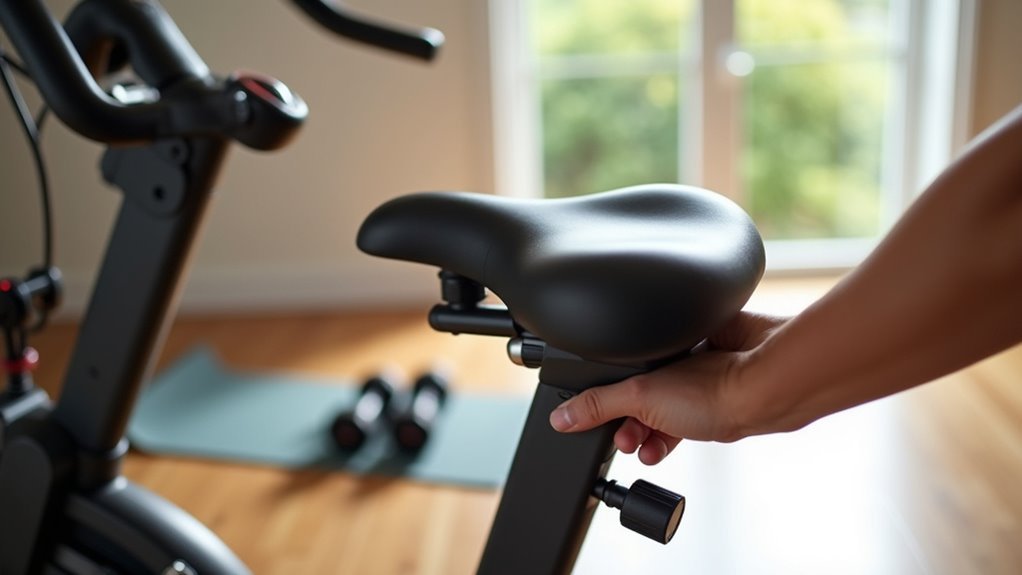
Once your seat position is properly adjusted, the next element to take into account is the handlebar alignment.
Proper handlebars position is essential for maintaining good posture while riding your bike. The ideal setup allows your elbows to be slightly bent while keeping your shoulders relaxed—not hunched up near your ears.
Your handlebar height should complement your seat height, though beginners might prefer handlebars positioned a bit higher for comfort. When you grip the handlebars, check that your shoulders align with your elbows and hips, promoting a neutral spine position. Additionally, adjusting the handlebar height can enhance your overall cardiovascular fitness and make your workouts more enjoyable.
Remember to periodically adjust your position during rides to prevent slouching and maintain comfortable form.
Frequently Asked Questions
How to Properly Sit on a Stationary Bike?
Proper posture requires correct seat height, back support, and core engagement. One should position feet flat on pedals, adjust handlebars appropriately, maintain smooth pedal technique, and control breathing during riding duration after warm-up stretches.
How to Make a Stationary Bicycle Seat More Comfortable?
Cyclists can increase comfort with gel covers or foam cushioning, wear padded bike shorts, adjust seat height properly, select ergonomic designs, modify handlebar position for ideal riding posture, and choose breathable seat materials.
How to Set up a Stationary Bike Seat?
Like Goldilocks seeking perfection, cyclists should adjust seat height to hip level, position seat for knee-pedal alignment, set handlebars for neutral posture, and level the saddle for ideal comfort during pedal rotation.
Can I Lose Belly Fat by Riding a Stationary Bike?
Stationary cycling can effectively reduce belly fat through consistent cardio workouts that elevate metabolism. Combining high-intensity exercise routines with proper nutrition maximizes fat burning benefits, supporting overall weight loss and fitness goals.